- In a world strained by ecological collapse, rapid population growth, and relentless extraction of natural resources, UNESCO Biosphere reserves offer evidence that coexistence is still possible.
- Biosphere reserves survive because of three pillars of support: people who care, journalists who give them a voice and laws that protect them.
- The views in the commentary are that of the authors.
The world is facing a Triple Planetary Crisis, where climate change, pollution and biodiversity loss converge. Around the world and especially in India and other South Asian countries, the pressures of unbridled resource extraction and rapid population growth have pushed ecosystems to their limits. In a situation like this, UNESCO Biosphere Reserves stand as rare “pockets of hope”. These designated protected ecosystems, whether terrestrial, marine or coastal, are living landscapes that prove it is still possible to protect nature while supporting human wellbeing.
In these reserves, sustainability is a scientific challenge as well as a cultural, ethical, and community-driven way of life.
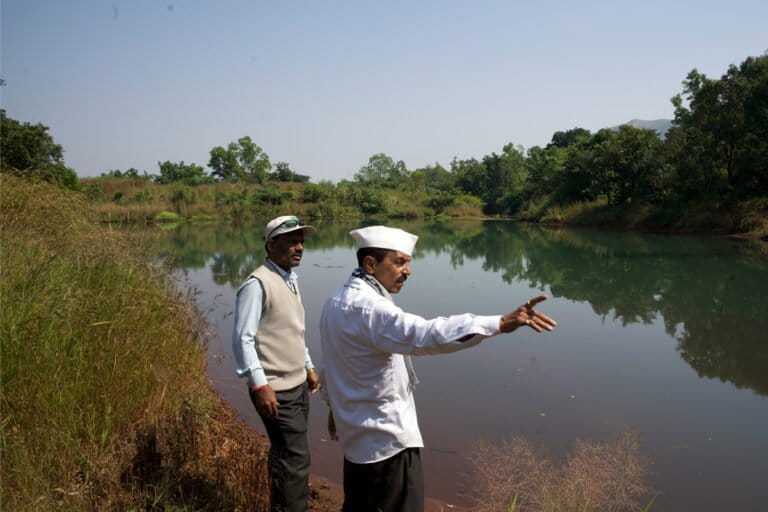
Every UNESCO Biosphere Reserve is shaped by the people who live within and around it. The forests, rivers, coastlines, and farmlands are not abstract conservation zones. These ecosystems are their homes, livelihood and identity. They are where memories reside. When these communities participate meaningfully in decision-making, and their rights and knowledge are respected, conservation stops being a top-down imposition and becomes a shared responsibility. Empowering communities is essential in South Asia where millions depend directly on natural ecosystems for survival. A well-informed, aware, and motivated community is the strongest force for conservation, and the primary agent that transforms a reserve from protected land into a living “pocket of hope”.

Stories give life to landscapes
Ethical, science-based journalism can help the world understand why these biosphere reserves matter. This is especially pertinent when misinformation obscures the truth about environmental issues. Journalists translate complex science into fact-based narratives, in an unbiased fashion, that inspire empathy and action, bridging the gap between research and public consciousness.
A case where good science journalism influenced biodiversity protection comes from India’s southeastern coast. Here, the quiet dugong, a marine mammal, was on the brink of disappearance. Its seagrass meadows had been depleted by careless fishing practices, development, and pollution, which worsened as human population in these areas grew. In the late 2010s, when journalists highlighted the dugong’s decline, public awareness shifted dramatically. This reporting catalysed scientific collaboration, stronger coastal protections, seagrass restoration, and partnerships with local fishers.
Today, dugongs are occasionally sighted again, which is a small but powerful sign that recovery is possible. In documenting an ecosystem at risk, journalism also influenced its transformation into a pocket of hope.
But the dugong’s future remains fragile and it needs protection from continued habitat loss, pollution, and climate change. Thoughtful and evidence-based journalism remains essential for sustaining public trust and political will.
Legal protection to support biospheres
Science and community participation need legal protection to endure. At the NilgiriScapes Conference in Ooty in 2025, environmental experts emphasised that UNESCO Biosphere Reserves must be firmly protected by law, particularly in countries where shifting political priorities can undermine conservation.
Legal frameworks, such as land-use laws, environmental impact assessments, community rights, and biodiversity protections, provide the backbone of accountability. Without them, decades of progress can be undone by a single policy shift or development pressure.
Biosphere Reserves will be sustainable when their conservation is a shared responsibility across local communities, governments, industries, and global institutions. Aligning national laws with international commitments such as the SDGs ensures that conservation efforts in these pockets resonate far beyond their boundaries.

Environmental stewardship is rooted in human culture
Historically, civilisations in Arabia, China, and India recognised that nature must be governed wisely. Modern milestones, from the 1972 Stockholm Conference to the 2015 Paris Agreement, have expanded this responsibility into a global framework. The Hangzhou Strategy, adopted in September 2025, calls for people-centred conservation, science-based management, and strong legal and communication frameworks.
Yet the gap between commitments and action remains stark.
Biosphere Reserves endure because three pillars support them:
- People who care
- Journalists who give nature a voice
- Laws that protect what must be protected
Together, they make a foundation for peace with the planet. Preserving these landscapes is not simply conservation. It is a reaffirmation of our duty to future generations.
India today has 13 UNESCO Biosphere Reserves, including the newly recognised Cold Desert Biosphere Reserve in Himachal Pradesh, declared in 2025. Several more landscapes, from the Western Ghats to the Sundarbans, are poised for future recognition. But recognition alone is not enough. These pockets of hope need: stronger legal protection, robust monitoring, empowered communities and journalism that tells their stories truthfully and passionately.
Banner image: Mountain peaks in Pin Valley National Park, which is part of the recently recognised Cold Desert Biosphere Reserve in Himachal Pradesh. Image by Timothy Gonsalves via Wikimedia Commons (CC BY-SA 4.0).
Credits