• Features
  • Videos
  • Podcasts
  • Specials
  • Articles
  • Shorts
Subscribe
  • English
  • Español (Spanish)
  • Français (French)
  • Bahasa Indonesia (Indonesian)
  • Brasil (Portuguese)
  • India (English)
  • हिंदी (Hindi)
  • বাংলা (Bengali)
  • Swahili
  • Videos
  • Podcasts
  • Articles
  • Short News
  • Feature Stories
  • The Latest
  • Explore All
  • About
  • Team
  • Contact
  • Subscribe page
  • Submissions
  • Privacy Policy
  • Terms of Use
  • Advertising
  • Wild Madagascar
  • For Kids
  • Mongabay.org
  • Reforestation App
  • Planetary Health Check
  • Conservation Effectiveness
  • Mongabay Data Studio

Latest

Invasive giant African snails spotted in Kerala. Image by Drajay1976 via Wikimedia Commons (CC BY-SA 3.0).

Invasives impact in Global South needs more attention

Arathi Menon 14 Aug 2026
Feature story

Disappearing grasslands impact bird populations, study finds

Simrin Sirur 14 Aug 2026

The fraught politics and ethics of climate rankings [Commentary]

Chirag Dhara 14 Aug 2026
Feature story

Genetic study of the Arunachali mithun flags declining breeding population

Barasha Das 13 Aug 2026
Feature story

Nine anchor species could meet India’s biodiversity and climate targets

Shradha Triveni 13 Aug 2026
Feature story

Free-ranging dogs, changing livelihoods reshape an agro-pastoral landscape

Phalguni Ranjan 13 Aug 2026
All news

Top stories

A Nilgiri pipit, the only grassland specialist species that was part of the study. Image by P. Jeganathan via Wikimedia Commons (CC BY-SA 4.0).

Disappearing grasslands impact bird populations, study finds

A male Nagami mithun. Image by Harshit Kumar.

Genetic study of the Arunachali mithun flags declining breeding population

Barasha Das 13 Aug 2026

Nine anchor species could meet India’s biodiversity and climate targets

Shradha Triveni 13 Aug 2026

Free-ranging dogs, changing livelihoods reshape an agro-pastoral landscape

Phalguni Ranjan 13 Aug 2026

The carbon market bets on an invasive tree

Yash Sadhak Shrivastava 12 Aug 2026

Subscribe

Stay informed with news and inspiration from nature’s frontline.
Newsletter

Free and Open

Help us tell impactful stories of biodiversity loss, climate change, and more
Learn more

News and Inspiration from Nature's Frontline.

Videos
A Nilgiri pipit, the only grassland specialist species that was part of the study. Image by P. Jeganathan via Wikimedia Commons (CC BY-SA 4.0).
Articles
Podcasts

Special issues connect the dots between stories

Beyond the Hype

A blackbuck at the Bagepalli plantation. Image courtesy of ATREE.

Cities need tailored restoration, not mass tree planting

Arathi Menon 17 Jul 2026
A ragpicker collects plastic to recycle from a garbage dump in Siliguri, West Bengal. (AP Photo/Tamal Roy)

When recycling plastic creates more problems than it solves

Ravleen Kaur 16 Apr 2026
Burning of garbage releases thick smoke in a city. Image by Jaskaran Singh via Wikimedia Commons (CC BY-SA 4.0).

Is the world betting too much on carbon removal technologies? [Explainer]

Debdutta Paul, Juhi Chatterjee 16 Dec 2025
Pollution in Delhi hangs over an apartment complex. Representative image by Sumitmpsd via Wikimedia Commons (CC BY-SA 4.0).

Cloud seeding not a proven solution for air pollution

Aisiri Amin 26 Nov 2025

From cloud seeding to carbon capture, there are several technologies and interventions increasingly being promoted as silver bullet solutions to environmental challenges. Through evidence-based reporting, we look beyond the headlines to assess the scientific evidence, practical challenges and the scale of the potential impact of some of these solutions.

Beyond the Hype series

More specials

7 stories

Decoding Heat

Visitors examine green capsicum at the fully elevated Section 1 of the agrivoltaics plant near Parbhani. Image courtesy of NSEFI & GIZ
33 stories

Climate Innovations

186 stories

Environomy

Free and open access to credible information

Learn more

Listen to Nature with thought-provoking podcasts

Wild Frequencies: Us and Them

Shreya Dasgupta, Kartik Chandramouli 1 Aug 2024

Watch unique videos that cut through the noise

The changing gourd behind Indian classical music

A social worker’s solo endeavour to track fluorosis and groundwater contamination

Biswajit Das, Nabarun Guha 16 Jun 2026

The desperate battle of Mizoram’s farmers with rats

Barasha Das, Surajit Sharma 19 Mar 2026

India’s secretive salamanders are losing their breeding grounds

Subhrajit Sen, Soham Das 17 Feb 2026

How are Kerala’s ‘rainkeepers’ measuring rainfall to save themselves from floods?

Arathi MR 20 Jan 2026

Free and Open

Help us tell impactful stories of biodiversity loss, climate change, and more
Learn more

In-depth feature stories reveal context and insight

One of the world's rarest pheasants, the western tragopan depends on undisturbed mountain forests for survival, but faces growing pressure from habitat degradation and human disturbance. Image by Jainy Maria.
Feature story

Himalayan pheasants face mounting human pressure

Hirra Azmat 11 Aug 2026
A tiger walks past a vehicle carrying tourists in Ranthambore National Park in 2010. (AP Photo/ Mustafa Quraishi, File)
Feature story

Tourism, human disturbance linked to higher stress in tigers

Sneha Mahale 11 Aug 2026
Feature story

Assam floods expose a crisis beyond heavy rain

Nabarun Guha 11 Aug 2026
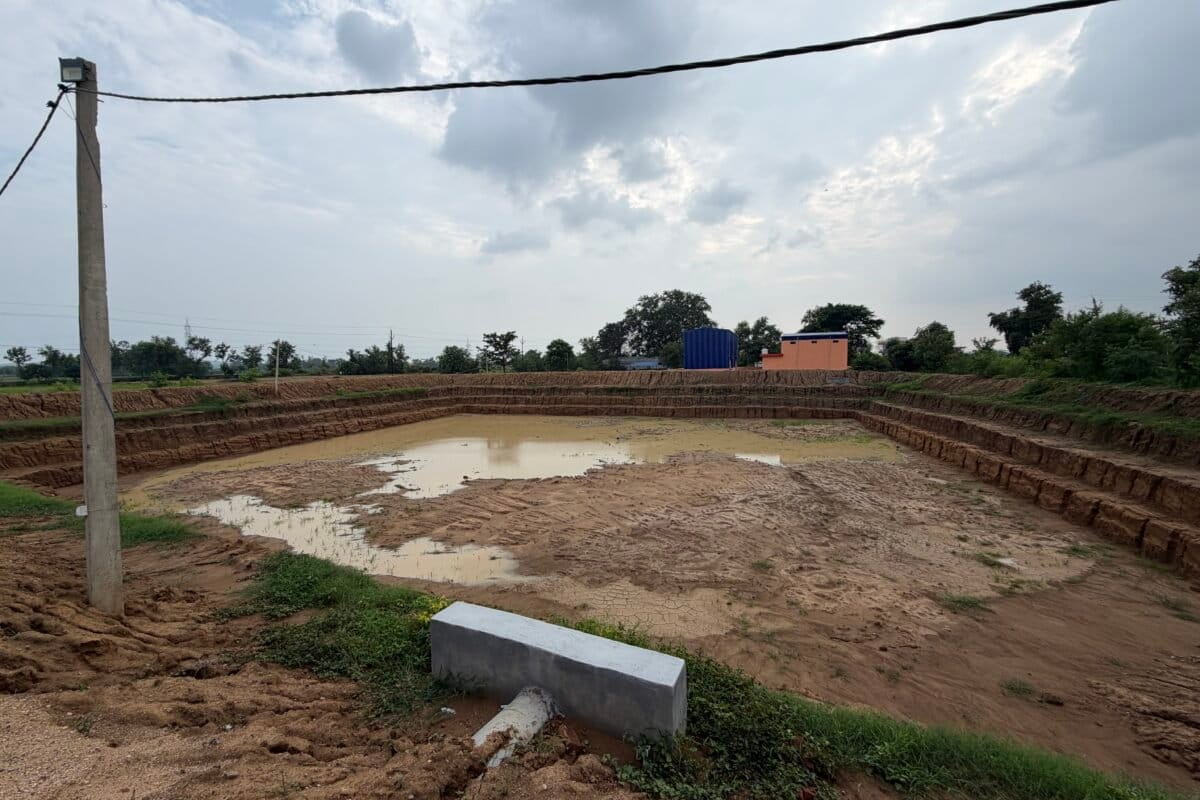
A pond recently dug by the government in Palamu. When Mongabay-India visited in late July, the pond held little water. Image by Ashwini Kumar Shukla.
Feature story

After decades of drought-proofing, farms still depend on rain

Ashwini Kumar Shukla 6 Aug 2026

Quickly stay updated with our news shorts

Invasives impact in Global South needs more attention

Arathi Menon 14 Aug 2026

Global biodiversity assessments have often suggested that the impacts of invasive alien species are greatest in wealthy countries of the Global North. A new study, however, challenges this notion and establishes that the severity of environmental impacts is generally higher in the Global South and calls out research bias for distorting the global picture.

The study, published recently in Science journal, combines two global datasets: GIDIAS, which contains more than 22,000 documented impacts involving over 3,300 invasive alien species from more than 6,700 scientific and grey-literature sources across 172 countries, and SInAS, which records the distribution of more than 39,700 alien species worldwide.

Considering research effort and the number of reports are much higher in the Global North, simply counting invasive species or documented impacts can make the region appear disproportionately affected. To better understand the impact, researchers, Sven Bacher, Petr Pyšek and Hanno Seebens used the IUCN’s Environmental Impact Classification for Alien Taxa (EICAT) under which an impact is considered severe when an invasive species causes a decline in a native population, local extirpation or global extinction.

Rather than simply counting how many invasive species or impacts have been recorded in a region, the researchers calculated average impact severity: the proportion of documented impacts that are severe. This was intended to reduce the effect of differences in research effort between countries.

The key findings include higher average impact severity in the Global South, the influence of research bias on assessments of invasive species impacts, the particular vulnerability of emerging economies, and the role of governance and management capacity in determining impact severity than large economies in the Global North.

The paper identifies India as one of the large, high-income developing economies where this pattern is visible. India has relatively high absolute numbers of documented impacts, but also a distinctly higher average impact severity than large economies in the Global North.

One of the biggest takeaways from the study is that weak governance and limited management capacity act as major drivers of high impact severity. Failure to recognise the Global South as facing the highest IAS impacts diverts attention away from the most threatened regions.

Previous research has identified emerging economies as countries likely to see the largest increases in alien species numbers in the near future as a result of strong economic development, potentially leading to more impacts, many of them severe. By contrast, wealthy countries of the Global North may have high introduction rates of alien species but also stronger governance and better management capacity as compared with the Global South, allowing them to implement policies and manage invasive species more effectively. The paper shows that good governance and effective management can reduce the impacts of biological invasions across most taxa and ecosystems.


Banner image: Invasive giant African snails spotted in Kerala. Image by Drajay1976 via Wikimedia Commons (CC BY-SA 3.0).

Invasive giant African snails spotted in Kerala. Image by Drajay1976 via Wikimedia Commons (CC BY-SA 3.0).

The world’s only flying mammal

Team Mongabay-India 12 Aug 2026

Species File: Exploring India’s biodiversity, one species at a time.

They sleep upside down and hunt for prey in the dark using sound waves — what can’t bats do? The only mammals capable of true flight, bats are remarkably adaptable, found on every continent except Antarctica. They offer critical ecosystem services by preying on insect populations, including agricultural pests and disease-carrying insects. For example, the critically endangered Kolar roundleaf bat (Hipposideros hypophyllus) that survives in a single cave in Karnataka is known to munch on 4,100 species of insects, including mosquitoes that transmit dengue and malaria.

India has roughly 135 species of bats — about 10% of global diversity — of which around 16 are endemic. The Western Ghats alone host at least 63 species, including the rare Wroughton’s free-tailed bat (Otomops wroughtoni). The Western Himalayas are home to 53 species of bats, including the East Asian free-tailed bat (Tadarida insignis), which until recently, was not recorded in India. Bats have also adapted to cities, roosting in old trees, under roofs, temple groves or heritage buildings.

The ecology of bats can vary surprisingly. The Indian flying fox (Pteropus giganteus), India’s largest bat with a wingspan of up to 1.5 metres, forages by sight and smell rather than echolocation. The palm-sized painted bat (Kerivoula picta), with its bright orange fur and black wings is vulnerable to the illegal wildlife trade.

Aside from insectivorous bats that control pests, India also hosts nectar- and fruit-feeding bats that pollinate flowers and disperse seeds, while their guano enriches soil with key nutrients.

Despite the many crucial roles played by them, bats remain among India’s least protected wildlife. Only six of the species found in India carry the highest legal protection under Schedule I of the Wildlife (Protection) Act. According to Bat Conservation International, of the 122 Indian bat species assessed by the IUCN, only 23% have stable populations, while the rest are declining.

Threats include habitat loss from deforestation and agricultural expansion, roost destruction in caves and old buildings, persecution linked to myths and fears of disease, and, increasingly, collisions with wind turbines.

In a story published by Mongabay-India in 2023, agroecologist Iqbal Bhalla, said: “There is no doubt that bats are incredibly important to agricultural landscapes. I hope that in the next few years we can get to a more definite answer as to exactly what their economic value is in Indian agriculture.”

Read more about bats in our stories on Meghalaya’s bat diversity, and Tamil Nadu’s bats being erased by urbanisation.


Banner image: An Indian flying fox perches on a banana tree. Image by Praveen P. via Flickr (CC BY-SA 2.0).

An Indian flying fox perches on a banana tree. Image by Praveen P. via Flickr (CC BY-SA 2.0).

Heatwaves and lightning notified as national disasters, government says

Simrin Sirur 7 Aug 2026

Heatwaves and lightning have officially been recognised as natural calamities eligible for relief under the State and National Disaster Response Funds, Union Minister of State in the Ministry of Home Affairs, Nityanand Rai, told Parliament on August 4.

The decision to notify heatwaves and lightning as disasters follows the recommendations of the 16th Finance Commission, which had recommended their inclusion “considering the increasing frequency and intensity of extreme weather events arising from climate change,” Rai said.

Rai also revealed that the total number of heatstroke cases since March 1, 2026 had reached 4,853, based on data from 51,000 National Heat-Related Illness and Death Surveillance reporting units. Telangana recorded the most number of cases (915), followed by West Bengal (733), Chhattisgarh (660), and Andhra Pradesh (540). Only 20 deaths were recorded over the same period, with the highest number – 11 deaths – reported from Maharashtra.

The SDRF and NDRF funds can be used for response, relief, recovery, and reconstruction purposes linked to the notified natural disasters. Long-term preparedness and capacity building activities, however, will have to be paid for from state and national disaster mitigation funds.

Experts have long called for the inclusion of heatwaves in the list of notified disasters so relief is systematically provided to vulnerable and exposed populations. Before the nationwide notification, only a handful of states had notified heatwaves as disasters within their own jurisdictions, such as Haryana, Odisha, Kerala, Telangana, and Tamil Nadu.

Lightning, on the other hand, is responsible for the largest number of deaths due to any disaster reported in India. Deaths due to lightning have consistently increased since 1975, data from the National Crime Records Bureau shows.

Other natural calamities notified by the central government include cyclone, drought, earthquake, fire, flood, tsunami, hailstorm, landslide, avalanches, cloudburst, pest attack, and frost and cold waves.


Banner image: A woman cools herself off with an ice pack during a heat wave in Banda, Uttar Pradesh. (AP Photo/Rajesh Kumar Singh)

A woman cools herself off with an ice pack during a heat wave in Banda, Uttar Pradesh. (AP Photo/Rajesh Kumar Singh)

Assam activist’s detention draws widespread condemnation

Simrin Sirur 6 Aug 2026

Over 60 civil rights groups have condemned the detention of Assam-based environmental and Indigenous rights activist Pranab Doley under the National Security Act, calling it a clear “attempt to punish and vilify activists for exercising their constitutional right to protest.” Doley led protests against a five-star luxury resort proposed to be built within the Kaziranga National Park and Tiger Reserve, a UNESCO World Heritage site housing the world’s largest population of one-horned rhinoceros.

Doley was detained under the National Security Act (NSA) on July 30, one day after securing bail from a sessions court. The NSA provides for preventive detention to maintain public order. Rights groups have called it a way to “to continue his unjust incarceration.”

Apart from the revocation of the NSA, the groups have demanded an independent investigation into police excesses against protesters, the release of all activists associated with land struggles in Assam, and a full, transparent disclosure of land allotments and tourism projects proposed in the National Park.

The luxury hotel is being developed by a Hyatt-linked company, Juniper Hotels, on land leased to them by the Assam Tourism Development Corporation. The Hyatt Group has since distanced itself from the project. Indigenous tea tribes facing eviction have petitioned the Gauhati High Court alleging the land for the project was forcibly acquired from them.

“Governments cannot be permitted to convert dissent and disagreement over development policy into questions of national security. Adivasi and Indigenous communities asserting their rights over land and for protection of the environment and natural resources, are not enemies of the nation,” the statement by rights groups says.

Doley was arrested on July 12 for “masterminding” a demonstration against the project on June 28, and was accused of attacking police personnel. A sessions court granted him bail on July 29, finding no evidence of violence against police, and on the contrary observing that the notice for his arrest was served belatedly.

“In matters where ecological preservation intersects with indigenous survival, the standard apparatus of criminal law cannot be used to suppress local anxieties. True public order is achieved not by silencing the affected, but by listening to them,” the bail order said. The next day, the Assam government imposed the NSA on Doley, which allows an accused to be held without trial or formal charges for up to 12 months.

The NSA notice claims that Doley violated the Foreign Contribution (Regulation) Act (FCRA) by engaging in “suspicious foreign transactions.”

“The use of the NSA against Doley is part of a growing pattern of BJP governments weaponising extraordinary laws to silence dissent. Similar attempts have been witnessed in Uttar Pradesh, where the NSA was invoked against labour activists protesting against exploitative working conditions in Noida,” senior Congress leader and former union environment minister Jairam Ramesh said in a post on X.

Several environmental NGOs have faced FCRA cancellation or suspension for opposing development projects in recent years.

Banner image: A tiger crosses a road in Kaziranga NP. (AP Photo/Anupam Nath)

A tiger crosses a road in Kaziranga National Park. (AP Photo/Anupam Nath)

Whiskered swimmers with webbed feet

Team Mongabay-India 5 Aug 2026

Species File: Exploring India’s biodiversity, one species at a time.

A recent survey has found evidence of a significant smooth coated-otter population in Mettur dam and Kaveri river stretches of Salem district in Tamil Nadu. Local fishers and residents reported the presence of more than 1,000 otters in the region.

Otters are semi-aqautic mammals found in rivers, wetlands, and mangroves. Their sleek bodies and webbed feet make them expert swimmers and efficient predators of fish and other aquatic animals, helping regulate prey populations and maintain ecosystem health. They also have whiskers that are sensitive.

Of the 13 global otter species, three are found in India. The smooth-coated otter (Lutrogale perspicillata) is the most widely distributed, found in all major river systems south of the Himalayas. The Asian small-clawed otter (Aonyx cinereus), the world’s smallest otter species, lives in high-elevation streams of the Western Ghats, the Himalayan foothills, and parts of Northeast India. The Eurasian otter (Lutra lutra) is more elusive and solitary than the other two, and is found in the Himalayas through to the northeast, as well as parts of the Western Ghats and central India.

Population estimates for otters in India are difficult to determine, given how little the species has been studied. According to the International Union for Conservation of Nature (IUCN), the smooth-coated otter is listed as vulnerable, based on ongoing population declines driven by habitat loss and hunting pressure. The Asian small-clawed otter is also listed as vulnerable, while the Eurasian otter is classified as near threatened. In India, all three otter species are protected under the Wildlife (Protection) Act, 1972.

Otters face multiple pressures, including river pollution, dam construction that alters river systems, and conflict with fisherfolk. The greatest threat, however, is poaching for fur and body parts.

In an earlier story that Mongabay-India published in 2024, Katrina Fernandez, director of Wild Otters Research and co-author of a 2016 TRAFFIC report, said, “The otters are relentlessly hunted for their body parts. In the 2000s, otter skins made up around 30 percent of the fur trade in India, of which China was the largest consumer.”

Read more about otters in our stories on filming an otter family on the Kaveri, community-based otter conservation in Maharasthra, and poaching pressures in the northeast.


Banner image: Smooth-coated otters. Image by Anirnoy via Wikimedia Commons (CC BY-SA 4.0).

Smooth-coated otters. Image by Anirnoy via Wikimedia Commons (CC BY-SA 4.0).

Study warns of growing landslide threat

Arathi Menon 30 Jul 2026

Climate change and land use changes could significantly increase landslide susceptibility and risk across Karnataka’s Western Ghats by 2050, according to a new study published in Scientific Reports. The modelling study evaluates future landslide susceptibility and risk by incorporating projected changes in land use/land cover (LULC) and rainfall patterns under different climate scenarios.

The research covers around 45,000 square kilometres across seven districts of Karnataka, including Uttara Kannada, Kodagu, Chikkamagaluru and Shivamogga, a region that has recorded more than 1,200 rainfall-triggered landslides.

Unlike conventional assessments that assume landslide-causing factors remain constant over time, the researchers incorporated projected changes in rainfall and land use under four Shared Socioeconomic Pathway (SSP) scenarios. Using machine learning, they combined these projections to identify future landslide hotspots and assess risks to people and infrastructure, making this one of the first future-oriented landslide assessments for the region.

The authors note that the intensity and frequency of fatal landslides in the Western Ghats are increasingly influenced by human-induced land use changes and climate change, making it essential to understand how these factors may evolve in the coming decades. They emphasise that susceptibility maps they developed identify areas most likely to experience landslides, while risk maps combine susceptibility with exposure to highlight locations where landslides could result in socioeconomic losses. Such assessments could inform infrastructure development, land use planning and disaster risk reduction.

The findings project a significant increase in rainfall intensity and urban development by 2050, leading to higher landslide susceptibility and risk across the study area. The greatest increases are expected along major transport corridors and densely populated parts of Uttara Kannada, Kodagu and Chikkamagaluru districts. According to the authors, the results demonstrate the combined influence of changing rainfall patterns and land use on future landslide hazards and provide valuable inputs for climate-resilient land use planning and disaster risk reduction strategies in the Western Ghats.


Banner image: A house left in ruins following a massive landslide in Wayanad, Kerala. Representative image by Divya Kilikar/Mongabay.

Share Short Read Full Article

Share this short

If you liked this story, share it with other people.

Facebook Linkedin Threads Whatsapp Reddit Email

Subscribe

Stay informed with news and inspiration from nature’s frontline.
Newsletter

News formats

  • Videos
  • Podcasts
  • Articles
  • Specials
  • Shorts
  • Features
  • The Latest

About

  • About
  • Contact
  • Impacts
  • Newsletters
  • Submissions
  • Terms of Use

External links

  • Wild Madagascar
  • For Kids
  • Mongabay.org
  • Reforestation App
  • Planetary Health Check
  • Conservation Effectiveness
  • Mongabay Data Studio

Social media

  • LinkedIn
  • Instagram
  • Youtube
  • X
  • Facebook
  • Telegram
  • Android App
  • Apple News
  • RSS / XML

© 2026 Copyright Conservation news. Mongabay is a U.S.-based non-profit conservation and environmental science news platform. Our EIN or tax ID is 45-3714703.