• Features
  • Videos
  • Podcasts
  • Specials
  • Articles
  • Shorts
Subscribe
  • English
  • Español (Spanish)
  • Français (French)
  • Bahasa Indonesia (Indonesian)
  • Brasil (Portuguese)
  • India (English)
  • हिंदी (Hindi)
  • বাংলা (Bengali)
  • Swahili
  • Videos
  • Podcasts
  • Articles
  • Short News
  • Feature Stories
  • The Latest
  • Explore All
  • About
  • Team
  • Contact
  • Subscribe page
  • Submissions
  • Privacy Policy
  • Terms of Use
  • Advertising
  • Wild Madagascar
  • For Kids
  • Mongabay.org
  • Reforestation App
  • Planetary Health Check
  • Conservation Effectiveness
  • Mongabay Data Studio

Latest

A fish swims through bleached coral reefs in Caribbean waters near Panama in August this year. Representative image. (AP Photo/Matias Delacroix, File)
Feature story

As El Niño strengthens, coral reefs face narrow windows for recovery

Max Martin 9 Oct 2026
Feature story

The emotional cost of displacement

Arathi M.R. 9 Oct 2026

Study identifies rare case of moth and lichen association

Arathi Menon 8 Oct 2026
Feature story

India’s deep-sea fishing dreams are struggling to stay afloat

Supriya Vohra 8 Oct 2026
Feature story

A changing climate is reshaping India’s infectious disease risks

Rupsy Khurana 8 Oct 2026

The giants with one horn

Team Mongabay-India 7 Oct 2026
All news

Top stories

A fish swims through bleached coral reefs in Caribbean waters near Panama in August this year. Representative image. (AP Photo/Matias Delacroix, File)

As El Niño strengthens, coral reefs face narrow windows for recovery

Baby Titus inside a neighbour's house that has been wrecked by floods. Image by Arathi M.R.

The emotional cost of displacement

Arathi M.R. 9 Oct 2026

India’s deep-sea fishing dreams are struggling to stay afloat

Supriya Vohra 8 Oct 2026
A woman wades through floodwaters to collect drinking water near her submerged house in Jorhat, Assam in August 2026. (AP Photo/Parikhit Saikia)

A changing climate is reshaping India’s infectious disease risks

Rupsy Khurana 8 Oct 2026

Forgotten vegetables could help make our diets more resilient

Sharmila Vaidyanathan 6 Oct 2026

Subscribe

Stay informed with news and inspiration from nature’s frontline.
Newsletter

Free and Open

Help us tell impactful stories of biodiversity loss, climate change, and more
Learn more

News and Inspiration from Nature's Frontline.

Videos
A fish swims through bleached coral reefs in Caribbean waters near Panama in August this year. Representative image. (AP Photo/Matias Delacroix, File)
Articles
Podcasts

Special issues connect the dots between stories

Deep Sea Dreams

India’s deep-sea fishing dreams are struggling to stay afloat

Supriya Vohra 8 Oct 2026

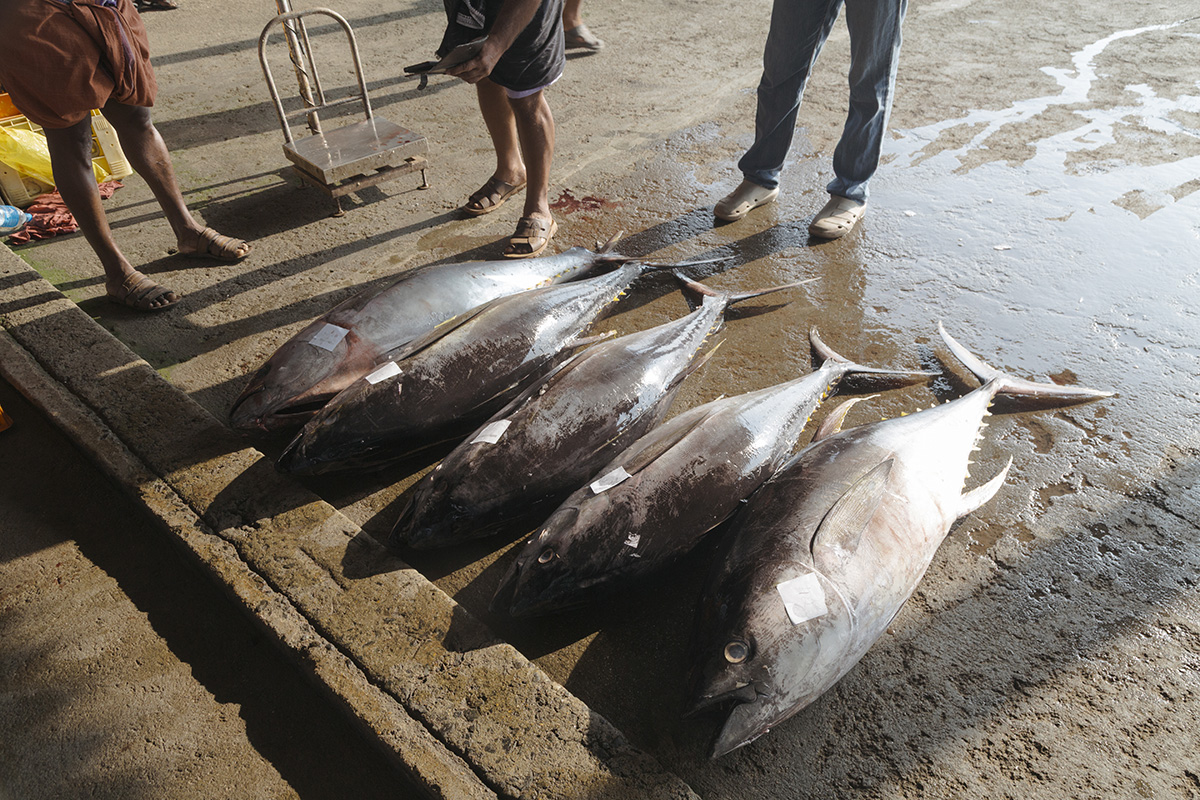
India is promoting deep-sea fishing with the promise of better incomes for the country’s traditional fishers. Government schemes have sought to accelerate this transition by providing financial support for deep-sea fishing vessels. Yet the move into deeper waters has proved far more complicated than policy documents suggest. Across the coastal states of India, fishing communities […]

Deep Sea Dreams series

More specials

5 stories

From the Wild, For Trade

8 stories

Beyond the Hype

8 stories

Decoding Heat

Free and open access to credible information

Learn more

Listen to Nature with thought-provoking podcasts

Wild Frequencies: Us and Them

Shreya Dasgupta, Kartik Chandramouli 1 Aug 2024

Watch unique videos that cut through the noise

Reviving Himachal’s traditional Kath-Kuni homes to beat the heat

How a village in Bastar is stopping forest fires

Prakhar Dobhal, Swara Garge 10 Sep 2026

How Maldharis find freshwater using ancient knowledge in arid Banni

Marhaba Hilali 2 Sep 2026

The changing gourd behind Indian classical music

Mahima Jain, Megha Acharya 20 Jun 2026

A social worker’s solo endeavour to track fluorosis and groundwater contamination

Biswajit Das, Nabarun Guha 16 Jun 2026

Free and Open

Help us tell impactful stories of biodiversity loss, climate change, and more
Learn more

In-depth feature stories reveal context and insight

An ibisbill tagged and fitted with satellite PTT. Image by Khursheed Ahmad.
Feature story

Climate change may increase the ibisbill’s habitat range, but other pressures loom

Hirra Azmat 5 Oct 2026
Declared a national project in 2014, the Polavaram project is funded by the union government, with Andhra Pradesh carrying out the construction. Image courtesy of Polavaram Project Authority.
Feature story

Unclear records leave villages in limbo over irrigation project displacement

Ayushi Sharma 2 Oct 2026
A farmer grazer her cattle. Image by Mahesh Maske.
Feature story

Maharashtra formally recognises women farmers regardless of land ownership [Commentary]

Soumya Swaminathan 1 Oct 2026
A pet African grey parrot in Yercaud, Tamil Nadu. More than 40,000 people in India have declared their exotic pets. By law, pet owners must register possession, transfer, birth and death of species listed in the Wild Life (Protection) Act. Representative image by Yercaud-elango via Wikimedia Commons (CC BY-SA 4.0).
Feature story

Legal system fails to keep pace with India’s growing exotic pet industry

Arathi Menon 1 Oct 2026

Quickly stay updated with our news shorts

Study identifies rare case of moth and lichen association

Arathi Menon 8 Oct 2026

A new paper documents the first known record of a moth using the umbilicate lichen, Lasallia pertusa, as a camouflage background. Published in the journal Arthropod-Plant Interactions, the observation was made in July 2025 at Duggi, in Kugti Wildlife Sanctuary, Chamba district, Himachal Pradesh, at about 3,200 m elevation.

Lichen-associated camouflage has been documented before, including in moths. In this case, however, the association involves an umbilicate (attached to its substrate only at a single point), foliose (with flat, leaf-like lobes) lichen, rather than the more commonly documented crustose or bark-growing lichens. The finding, therefore, expands the range of lichen growth forms known to potentially participate in insect camouflage. It also points to the fact that a seemingly inconspicuous lichen can be an important part of an animal’s visual environment and survival strategy.

One of the authors, Sanjay Kumar Uniyal, informs Mongabay-India that though there have been similar observations of moths mimicking lichens in the past, this particular lichen species has been documented for the first time. “This might have an evolutionary consequence which can only be understood through further studies,” Unniyal shares.

L. pertusa has a large, perforated and highly irregular thallus (vegetative body), providing a particularly complex visual background, reports the paper. The moth that belongs to the family Noctuidae, was found resting directly on the lichen growing on exposed rock. The moth’s identification was based on photographs and expert examination. The paper reports that the moth species couldn’t be identified due to the absence of a specimen.

The proposed mechanism, however, is crypsis or background matching, one of the most widespread camouflage strategies among insects inhabiting visually heterogeneous environments, says the report. In this case, the moth resembles the visual characteristics of its immediate surroundings, reducing its contrast against the background.

The likely predators are visually hunting animals, particularly birds and lizards, although the study did not experimentally test whether those predators actually found the moth harder to detect.

The findings, however, come with an important caveat that it was simply an observation and not an experimental demonstration of camouflage effectiveness.


Banner image: A moth camouflaged against L. pertusa lichen. Image by Sanjay Kumar Unniyal.

A moth camouflaged against L. pertusa lichen. Image by Sanjay Kumar Unniyal.

The giants with one horn

Team Mongabay-India 7 Oct 2026

Conservation efforts have re-established the greater one-horned rhinoceros in Assam’s Manas National Park. The species had once been wiped out from the park but was brought back through wild-to-wild translocation and rhino rehabilitation programmes. A recent study of the re-established population offers encouraging signs of adaptation in its restored habitat.

The greater one-horned rhino (Rhinoceros unicornis) is the largest of the three rhino species found in Asia. It is identified by a single black horn, about 8-25 inches long, and grey-brown hide with skin folds that give it an armour-plated appearance. It’s about half the weight of an elephant, going up to 2,700 kilograms and is around 6.5 feet tall.

Despite its size, the rhino is a good swimmer and spends considerable time in wetlands and grasslands. It mainly feeds on grasses, leaves, branches of shrubs and trees, fruit, and aquatic plants. The greater one-horned rhino now numbers at around 4,075 individuals found only in the grasslands of India and Nepal.

The IUCN Red List classifies the species as vulnerable, which means it faces a high risk of extinction in the wild. In India, it receives the highest legal protection under Schedule I of the Wildlife (Protection) Act, 1972, and is listed in Appendix I of CITES, which bans international trade.

Rhinos play an important role in shaping grassland and wetland ecosystems. However, habitat loss and fragmentation, invasive species and human-animal conflict remain major threats to the species. The rhino has also faced illegal hunting for its horns.

In a story published by Mongabay-India in April 2026, Mudit Gupta, Landscape Lead, Eastern Terai, Terai Arc Landscape, WWF-India, said, “Poaching remains a potential threat once rhinos are outside fenced protection, and it is countered by increased ground patrols, intelligence-led protection initiatives, ongoing radiotelemetry tracking of released rhinos, and close cooperation with enforcement agencies across borders.”

Read more about saving India’s wild ‘unicorns’ and what the DNA says about the future of rhinos in India.


Banner image: One-horned rhino with baby in Kaziranga National Park, Assam. Image by Joli via Wikimedia Commons (CC BY-SA 4.0).

The visiting grassland gardeners

Team Mongabay-India 30 Sep 2026

Species File: Exploring India’s biodiversity, one species at a time.

Flying thousands of kilometres circumventing the mighty Himalayas, harriers arrive in India’s grasslands around July every year, when winter sets in across their breeding grounds in Central Asia and Russia. Mated pairs perform a suave mid-air food pass, with the male dropping prey for the female to catch during flight.

They hunt by the day, circling low and in zigzag patterns to find small mammals, birds, reptiles, and insects. In addition to controlling their prey populations, a recent study found that two harrier species — the pallid and Montagu’s harriers — are surprisingly also grassland gardeners; they consume seeds carried inside their prey’s gut and later expel them unharmed.

Of the 16 harrier species found worldwide, six visit India — Montagu’s, pallid, hen, pied, and the Eurasian (western) and eastern marsh harriers. Unusually for raptors, they nest on the ground, and roost communally in large numbers with other harrier species — the world’s largest such roost documented so far was at Velavadar National Park, Gujarat.

Most harrier species are listed as least concern by the IUCN, except the pallid harrier, which is near threatened due to a global population decline. In India, harriers receive the highest legal protection under Schedule I of the Wildlife (Protection) Act, 1972.

Long-term monitoring by Ashoka Trust for Research in Ecology and the Environment’s Harrier Watch programme found that the number of harriers roosting together had declined between 1985 and 2015, driven largely by the loss of grasslands to agriculture, livestock overgrazing, wind and solar plants, and invasive species. The decline in prey such as grasshoppers due to pesticide use also adds to the pressure.

In a story published by Mongabay-India in July 2026, Vishwatej Pawar, co-founder of The Grasslands Trust said, “Grassland specialist species like the harriers actually play an important role in stabilising the populations of insects, pests, and even rodents, which helps farmers. When their habitats change, either due to afforestation or due to trenches, they compete for space or are unable to nest, roost, or properly forage, which causes population decline.”

Read more about the harriers’ role in grassland seed dispersal, their extraordinary migration journey, and declining populations.


Banner image: A gliding hen harrier. Image by Larisa Artemyeva via iNaturalist (Public Domain).

New toad species described in northeast mountain tops

Divya Kilikar 30 Sep 2026

A May 2026 study describes a new species of toad (Duttaphyrnus phawngpui sp. nov.) from Phawngpui National Park, located in southeastern Mizoram along the border with Myanmar. Researchers studied two individuals found at the hilltops. The species was named after Phawngpui, Mizoram’s highest mountain peak at 2,157 metres above sea level.

True toads of the Duttaphyrnus genus occur as many species in varied habitats in South and Southeast Asia — often even in polluted areas. However, the newly described species and its closest relatives, D. stuarti, D. chandai and D. dhara, are largely restricted to the higher ranges of the eastern Himalayas, according to Jayaditya Purkayastha, a co-author of the study. Morphological and DNA analyses of the two specimens collected helped identify distinctions from the previously known species.

Researchers encountered D. phawngpui sp. nov. individuals among leaf litter on the forest floor along the edge of a trail leading to the summit of Phawngpui at above 2,000 masl. The area was abundant in dense ground cover in the form of shrubbery as well as bamboo patches, and had relatively low human disturbance, hinting at the toad’s preferred ecosystem features.

D. phawngpui and its relatives are facing the immediate threat of habitat loss, as the tops of mountains (sky islands) that offer ideal conditions, shrink in size. “They are habitat specific, not generalists, meaning they can only survive in certain conditions. D. phawngpui is a ground dwelling frog that requires grassy patches, high humidity and forest streams, especially for breeding,” says Purkayastha.

The surveys were conducted by researchers from Mizoram University; Assam Don Bosco University; and Help Earth, a nonprofit organisation based in Guwahati. Jayaditya Purkayastha, general secretary at Help Earth, is a herpetologist who says the organisation has been working on amphibian and reptile taxonomy and on-ground conservation since 2006, helping describe over 38 species so far, including Sengupta’s cricket frog (Minerva sengupti) and urban bent-toed gecko (Cyrtodactylus urbanus).

Researchers part of the survey have observed Duttaphyrnus toads in the landscape eating a variety of food based on availability, largely insects like termites, locusts, grasshoppers, cockroaches, etc. but remain uncertain of the new species’ feeding behaviour. D. phawngpui could possibly have a similar diet. Duttaphyrnus toads possess parotid glands that secrete a foul, toxic fluid that make them unappetising for most potential predators, like snakes.

“The species is very susceptible to ecosystem changes. They cannot adapt to high temperatures, and must be considered in conservation efforts as climate change impacts worsen and human encroachment continues up hill tops. Human pressures can trigger dark extinction — the loss of species before we even discover them,” adds Purkayastha.


Banner image: Duttaphyrnus phawngpui sp. nov. Image courtesy of Dawngliana et al.

Duttaphyrnus phawngpui sp. nov. Image courtesy of Dawngliana et al.

Maharashtra declares drought as El Niño deepens

Kundan Pandey 28 Sep 2026

The Maharashtra government has declared drought in 265 of the state’s 358 talukas, along with a slew of relief measures.

Based on conditions during the 2026 kharif season, the government order issued on September 26 identifies 265 talukas as drought-affected.

These talukas are spread across 32 districts, including Beed, Latur, Nanded, Amravati, Akola, Yavatmal, Nashik, Dhule and Gadchiroli. Chhatrapati Sambhajinagar division has the highest number of drought-hit talukas, at 74, followed by Amravati (56), Nashik (49), Nagpur (39) and Pune (35).

The state government has issued instructions to begin water conservation works and to plan for drinking water and livestock water needs. It has also announced several concessions, including exemption from land revenue, restructuring of crop loans, a moratorium on recovery of agriculture-related loans, exemption from current electricity bills for agricultural pumps, and waiver of exam fees for school and college students. The government statement said it will also provide fodder for livestock.

As per the order, district collectors will immediately begin panchnamas (on spot damage assessments). The order asks district officials to submit photographs of crop conditions with GPS coordinates to the government. The CM office said it will announce assistance for crop losses of drought-affected farmers through a separate government resolution after completing the prescribed procedures.

Chief Minister Devendra Fadnavis said that the state will study the impact of El Niño, which could peak by the end of February. The India Meteorological Department (IMD) had forecasted below-normal monsoon rainfall during the Kharif season, saying it will be affected by ongoing El Niño conditions.

On September 27, Sharad Pawar, president of the Nationalist Congress Party (Sharadchandra Pawar), sent the Chief Minister a letter with 17 demands for farmers and agricultural workers. It asks the government to declare the remaining talukas drought-hit, waive land revenue and agricultural loans, and give 25 kg of free grain per family. The letter also seeks a compensation of ₹100,000 per hectare for farmers and ₹25,000 for farm labourers.

Pawar also demanded that tehsildars be empowered to approve water tankers for people and livestock, that power supply to farm pumps not be cut in drought-hit areas, and that the legislature hold a special three-day session on the drought. He asked that financial aid reach farmers before Dussehra and Diwali. He also asked for a special three-day session of the legislature to discuss the state’s serious drought situation.

Banner image: The Maharashtra government has declared drought in 265 of the state’s 358 talukas. Image by Mahendraparikh23 via Wikimedia Commons (CC-BY-SA-4.0)

Banner Image: The Maharashtra government has declared drought in 265 of the state's 358 talukas. Image by Mahendraparikh23 via Wikimedia Commons (CC-BY-SA-4.0)

India postpones Cambodia tiger reintroduction

Arathi Menon 24 Sep 2026

India and Cambodia have postponed a plan to reintroduce Bengal tigers into Cambodia, moving the target from 2025 to 2028 after a review found that the available prey base in the proposed release landscape remains too low to support a viable tiger population.

The delay comes months after Mongabay reported concerns among conservation scientists about whether the Cardamom Mountains landscape has sufficient prey to sustain tigers over the long term. Cambodia’s last confirmed tiger was photographed by a camera trap in 2007, and the country formally declared tigers extinct in 2016.

The proposed release site is in the Cardamom Mountains of southwestern Cambodia, in the 926,123-hectare Kravanh National Park. The landscape is among Cambodia’s most intact forest areas, but prey availability has remained a major concern.

A 2020 study assessing the feasibility of tiger reintroduction in the Cardamom Rainforest Landscape found a high risk that prey densities were insufficient to support a viable tiger population. Researchers estimated a less than 25% probability that the area could support 25 adult tigers. The study found an 80% probability the forest had enough prey to support a small population of five tigers.

Carnivore biologist K. Ullas Karanth, who was quoted in Mongabay’s June report, has emphasised that prey availability ultimately determines whether tigers can survive in a landscape. He has cautioned that releasing tigers into forests without sufficient prey is unlikely to succeed.

The revised 2028 timeline gives Cambodia additional time to rebuild prey populations and strengthen protection in the proposed tiger habitat. Cambodian authorities have previously identified increased patrolling, zero-snaring efforts and prey restoration as priorities before tigers are introduced.


Banner image: A male tiger in Ranthambore Tiger Reserve. Image by Koshy Koshy via Flickr (CC BY 2.0).

A male tiger in Ranthambore Tiger Reserve. Image by Koshy Koshy via Flickr (CC BY 2.0).

Share Short Read Full Article

Share this short

If you liked this story, share it with other people.

Facebook Linkedin Threads Whatsapp Reddit Email

Subscribe

Stay informed with news and inspiration from nature’s frontline.
Newsletter

News formats

  • Videos
  • Podcasts
  • Articles
  • Specials
  • Shorts
  • Features
  • The Latest

About

  • About
  • Contact
  • Impacts
  • Newsletters
  • Submissions
  • Terms of Use

External links

  • Wild Madagascar
  • For Kids
  • Mongabay.org
  • Reforestation App
  • Planetary Health Check
  • Conservation Effectiveness
  • Mongabay Data Studio

Social media

  • LinkedIn
  • Instagram
  • Youtube
  • X
  • Facebook
  • Telegram
  • Android App
  • Apple News
  • RSS / XML

© 2026 Copyright Conservation news. Mongabay is a U.S.-based non-profit conservation and environmental science news platform. Our EIN or tax ID is 45-3714703.