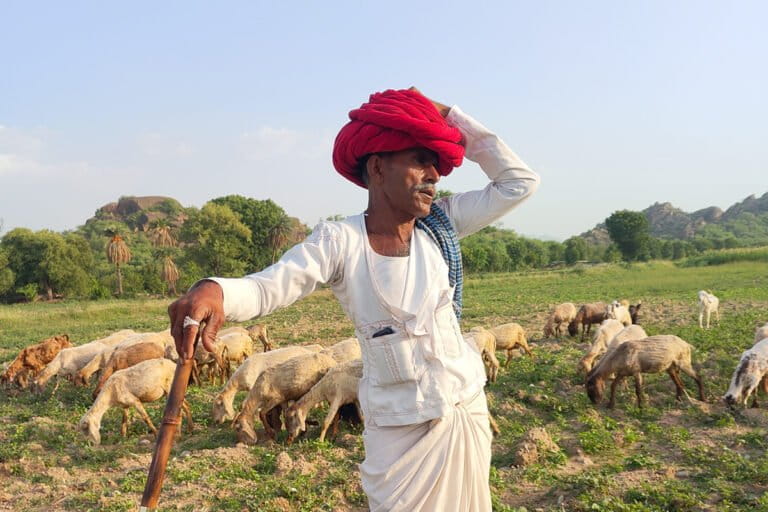
For Nabudo Halepotra, life in Banni means knowing how to live with extremes. In this arid landscape of Kachchh, Gujarat, summer temperatures can touch 50°C, while much of the groundwater is too saline to drink. Yet Nabudo and other Maldhari pastoralists know where to look for freshwater.
Beneath the dry beds of seasonal ponds known as jheels, they dig shallow wells called virdas, drawing on generations of knowledge to find freshwater in one of India’s hottest and most saline landscapes.
But these wells are much more than water harvesting structures. They are dug collectively, maintained across generations and woven into pastoral life. A Maldhari woman from Berdo, where piped water supply is unreliable, says, “If there is no virda, our existence will be threatened. Our cattle will perish.”
But how long can this system last? Unpredictable rainfall, rising temperatures, the spread of the invasive Prosopis juliflora, and the decline of traditional practices are putting pressure on a system built on intimate knowledge of the land.
Despite these challenges, some communities continue to use and maintain virdas through long summers and piped-water supply disruptions.
This film was produced under Mongabay-India and ALT EFF’s Video Reporting Opportunity programme.
Credits