- The Wild Life (Protection) Act of 1972 was a landmark in India’s conservation journey. It laid the foundation for centralised legal protection of wildlife. However, it has become increasingly rigid with inherent limitations and it has outlived its utility.
- The absence of measurable recovery except for a few species, combined with escalating human-wildlife conflict, raises concerns whether the Act’s approach aligns with ground and lived realities.
- An enabling framework for a new wildlife Act is needed, one that balances species diversity with livelihoods embracing conservation and sustainable use.
- The views in this commentary are that of the author.
India ushered in an era of protectionist conservation with the Wild Life (Protection) Act (WLPA) in 1972. At that time, the Act was sought to safeguard the nation’s rich yet dwindling wildlife and biodiversity. Wild animals were granted protection under one unified central Act, leading to a significant decline in legal hunting across the country, while poaching was never addressed until much later. This was facilitated by the political climate prevalent at that time, with Prime Minister Indira Gandhi enjoying widespread patronage and influence with most states under Congress Party rule.
The WLPA was promulgated 25 years after India’s independence from British rule. It was a tumultuous period, after independence, when the big game hunters unilaterally imposed a moratorium on tiger hunting for a span of five years beginning in 1968 to improve numbers which they felt were dwindling. They did not realise at that time that two systems inimical to tigers and other carnivorous animals, that is poaching and killing carnivores for cattle and livestock protection, were the reasons for their dwindling numbers. This gave the government, led by Prime Minister Indira Gandhi a window of opportunity and purpose to ban all hunting.
The WLPA was conceived as a central law under the concurrent list therefore not necessarily superseding state wildlife legislations that had until then governed hunting and protection. For a period, however, both central and state laws worked in tandem, which allowed for a federal participation in its application of the law. Some states continued to permit hunting; with Jammu and Kashmir being the last to officially ban hunting in 1991. It was at this time that a paradigm shift took place, concentrating the powers almost exclusively into the hands at the centre. Before 1991, the Act allowed for certain exemptions such as the destruction of animals destroying crops, and killing livestock and people. The 1991 amendment marked a decisive shift towards stricter, protectionist conservation with draconian punishments.
Evolution of the Act
Over time, successive amendments made the WLPA increasingly stringent, with the 1991 amendment setting the tone for restrictive amendments to follow. While the intent was to strengthen protection, critics argue that the Act has become excessively rigid, to the point of being counterproductive; undermining practical wildlife management. One of the most debated questions still remains: Has the WLPA truly succeeded in conserving wildlife?
Though the short answer is a resounding no, the answer is far from straightforward. The intertwining of religious beliefs, varied cultures and traditions complicates this simple answer. A striking example is the rhesus macaque (Macaca mulatta), revered in Hindu mythology and worshipped in many regions. Despite causing widespread agricultural losses, the macaque is difficult to manage because of its sacred status. Although rhesus macaques and the house crow (Corvus splendens) have been removed from WLPA protection, it has not alleviated the problem, since sentiments prevent effective population management.
Successes and shortcomings
While the WLPA has undoubtedly curbed hunting and created a legal framework for protectionist conservation, its effectiveness in ensuring species recovery is questionable, excepting for iconic species like the tiger, lion, leopard and elephant — notably the charismatic mega-fauna for tourism, therefore, their singular protection. However, recovery across the broader wild species spectrum has been limited and weak at best. Therefore, not a single species has been down-listed under the Act, which suggests that conservation outcomes have fallen far short of expectations. On the contrary, many species have been up-listed to higher categories of protection, complicating their management and straining resources, while exacerbating human-wildlife conflict. WLPA has been reduced to two Schedules for Indian wild animals from the earlier five Schedules, with almost similar penalties if harmed, even by way of self-protection or protection of livestock and property. WLPA has also appended the entire Convention on International Trade in Endangered Species of Wild Fauna and Flora (CITES) with the Appendices, making it cumbersome and a nightmare to implement for the field staff tasked with its enforcement.
The absence of measurable recovery except for a few species, combined with escalating human-wildlife conflict, raises concerns whether the Act’s approach aligns with ground and lived realities. For example, farmers face heavy losses from crop-raiding animals including mega-herbivores, yet compensation remains inadequate, and the procedures lengthy and time consuming. Farmers have also died by suicide, unable to bear financial losses. In many cases large felines are thriving in human-dominated landscapes, preying on livestock, pets and sometimes people, making them existential threats. Communities living near protected areas often view wildlife as non-desirable rather than a shared heritage, leading to acrimonious friction, especially with large carnivores and crop raiding herbivores, including mega-herbivores that have morphed into constant and existential threats. Enforcement agencies frequently clash with local lived realities, cultures and traditions, severely undermining public support for conservation.
Human rights and animal welfare
The world is changing and so too are the perceptions and aspirations of the people. While wild animals are an integral part of the ecosystem, local people who lived and coexisted with them for millennia on a “thus far, no further” mutual redline maintained a fine balance. That has been repealed under the law, which gives absolute immunity to the wild animals; while the people are now forced to reluctantly service the underbelly of conservation, grudgingly protecting the wild animals that are inimical to them, without any tangible benefits accruing from their forced sacrifice. Many Indigenous and tribal peoples have been displaced, outlawing their cultures and traditions, displacing them, making them “ecological refugees”.
Wild fauna is part of the shared ecosystem providing us, and especially the Indigenous people dependent on wildlife, a source of nourishment, clothing, and is intricately woven into their cultural, social, traditional and religious belief systems. Wildlife also provides both tangible and intangible benefits through their consumptive and non-consumptive use.
When wildlife is valued, it will draw more protection, providing land when there is an economic incentive to it. South Africa, post COVID-19 realised 2.5 billion US dollars, while providing nearly 100,000 jobs for people. The stakeholders will be powerful enough to provide for, and protect the land and the wildlife it holds, there will be active adaptive management; people — especially the disadvantaged, unskilled — will get jobs and livelihoods, having a cascading effect on the environment through protection and habitat management, reducing poaching and illegal occupation of forest land.
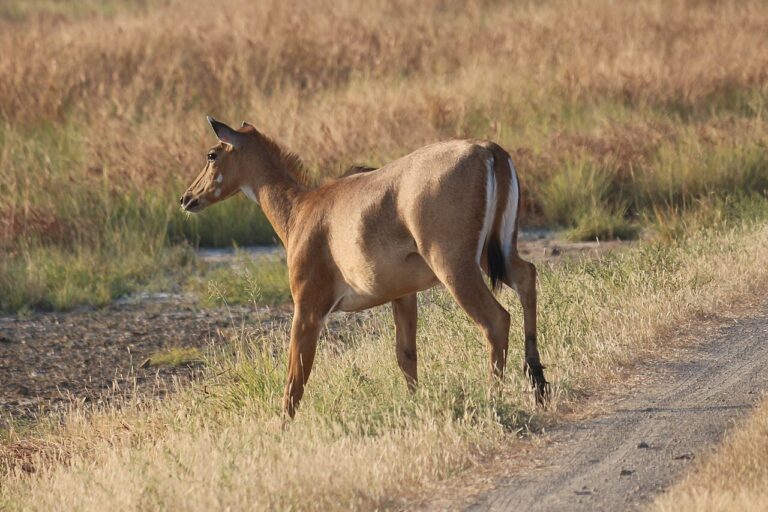
Presently, many states including Bihar allow wild animals — especially crop raiders like wild boar and nilgai — to be culled, but the carcasses have to be destroyed. Why should nourishment be destroyed, especially when millions go hungry? This has not been satisfactorily addressed nor replied to. India is one of the worst hit by malnourishment and protein deficiency.
Unfortunately, neither are human rights nor animal welfare addressed by the WLPA. While it might not be its mandate to take care of people, it is beholden by law to take care of the wild animals that are under its custodianship.
To address the several issues that are plaguing wildlife, causing severe harm to people resulting in retaliatory and indiscriminate killing of wild animals, a new Act has to be framed with sensible rules which should be governed by science and not human emotions. In addressing issues paramount for wildlife management, habitat management will logically supersede wildlife, the more varied and ecologically and environmentally stable; the greater will be its diversity and wild animal abundance.
A global outlook
Wildlife trade is becoming important, with India becoming a major hub for illegal wildlife trade (IWT). To address this emerging trend a separate entity with its own Act and rules must be framed, with specialised and trained staff to handle this very important branch. The Wildlife Crime Control Bureau (WCCB) should be strengthened and provisions of the CITES treaty, Trade Records Analysis of Flora and Fauna in Commerce (TRAFFIC), South Asia Wildlife Enforcement Network (SAWEN) and other international and multilateral treaties and instruments we are a signatory to should come under its purview.
Towards a balanced approach
An enabling framework for a new wildlife Act is needed — one that balances species diversity with livelihoods embracing conservation and sustainable use. It can address the needs and aspirations of the local communities while increasing wild animal populations, drawing from the excellent work done by several Southern African countries, especially Botswana, Namibia, South Africa, Zambia and Zimbabwe, where wild animals are increasing, and land is allotted and expanded to help their increase, mainly by non-state actors.
Some possible directions for reform include adaptive management which involves a regular review of species protection status based on scientific data rather than rigid categorisation; community engagement by involving local people in conservation decision-making, turning them from reluctant and passive bystanders into active stakeholders; and strengthening compensation schemes, promoting crop insurance, and developing innovative deterrents for human-wildlife conflict mitigation. Looking at wildlife economy where one can innovate and potentially increase employment cutting across various sections of societies, many of whom are unskilled and also marginalised, could be another approach. In addition, recognising the role of religion and tradition, while encouraging responsible coexistence and empowering states and local institutions to tailor solutions for their unique ecological and social contexts can also be possible directions for reform.
The WLPA was a landmark in India’s conservation journey. It laid the foundation for centralised legal protection of wildlife. However, it has become increasingly rigid with inherent limitations. Times have changed and it has outlived its utility since it still bears the indisputable imprint of former colonial and autocratic patronage. The era of fortress conservation is over, the sooner we recognise it, the better. Conservation can never succeed through prohibition alone; it requires sensitivity, flexibility, inclusivity, and adaptability. To this end, there is the need to rewrite the entire Act, bring in a nuanced understanding of managing wildlife while respecting human rights and human needs; the new Act must be forward looking, dynamic, participatory, and federal, built on a robust and practical framework.
Mathen Mathew is Vice President of Asian Affairs at IWMC World Conservation Trust and a member of several IUCN specialist groups. His work focuses on human-wildlife conflict, ecotourism, livelihoods, and ecological restoration.
Citation:
- Kothari, A., Pande, P., Singh, S., & Variava, D. (1995). People and Protected Areas: Towards Participatory Conservation in India. Sage Publications.
- Sekhsaria, P. (2017). Conservation Kaleidoscope: People, Protected Areas and Wildlife in Contemporary India. Orient BlackSwan.
- Rangarajan, M. (2001). India’s Wildlife History: An Introduction. Permanent Black.
- Jhala, Y.V., Qureshi, Q., & Nayak, A.K. (Eds.). (2021). Status of Tigers, Co-predators and Prey in India 2018. National Tiger Conservation Authority.
- Athreya, V., Odden, M., Linnell, J.D.C., Krishnaswamy, J., & Karanth, K.U. (2013). Big cats in our backyards: persistence of large carnivores in a human dominated landscape in India. PLoS ONE, 8(3), e57872.
- https://www.eenadu.net/telugu-news/crime/general/0300/125171336
- M. Vikas, Vidya Athreya, Sunil Limaye (2022) Changing a leopard’s spots or how people spot leopards? Managing human Leopard interactions in urban India
- World Development Perspectives journal homepage: www.sciencedirect.com/journal/world-development-perspectives
- Arvind Kumar Jha (2021) From Hunters to Ecological Refugees. BUUKS
- R. Cooney, C. Freese, H. Dublin, D. Roe, D. Mallon, M. Knight, R. Emslie, M. Pani, V. Booth, S. Mahoney and C. Buyanaa The Baby and the Bathwater: trophy hunting, conservation and rural livelihoods Unasylva 249, Vol. 68, 2017/1 Food and Agriculture Organisation of the United Nations
- IUCN SSC (2012). IUCN SSC Guiding principles on trophy hunting as a tool for creating conservation incentives. Ver. 1.0. IUCN, Gland.
- van der Merwe, P., & Saayman, A. (2023). Assessing the contributions of hunting tourism to the South African economy: a post-COVID analysis. Tourism Economics.
- https://www.deccanherald.com/india/bihar/bihar-government-to-launch-drive-to-cull-nilgai-wild-boars-in-5-districts-3204399
- Global Hunger Index (GHI). (2024). India Country Report. https://www.globalhungerindex.org/india.html
- Shoba Suri (2020) India’s protein deficiency and the need to address the problem, Observer Research Foundation ResearchGate https://www.researchgate.net/publication/347523282
- Shawn J. Raily and Len H. Carpenter (2003) Adaptive Impact Management: An Integrative Approach to Wildlife Management https://www.researchgate.net/publication/252562779
- Dilys Roe IIED, UK and Penny Urquhart Khanya, South Africa (2001) Pro-Poor Tourism: Harnessing the World’s Largest Industry for the World’s Poor
- F. Murindagomo, Wildlife management in Zimbabwe: The CAMPFIRE programme Department of National Parks and Wildlife Management, Zimbabwe.
- WCC-2020-Res-101-EN (World Conservation Congress – IUCN) Addressing human-wildlife conflict: fostering a safe and beneficial coexistence of people and wildlife
- Taddeo Rusoke Buffer Crops Farming against Wild Animal Damage on Crops in Uganda (2023) African Wildlife Economy Institute, Stellenbosch University, South Africa https://wildlifeeconomy.info/research/buffer-crops-farming-against-wild-animal-damage-crops-uganda
- Benis Nchine Egoh and Joachim Maes Chapter 12 Preserving Regulating and Cultural Ecosystem Services: Transformation, Degradation and Conservation Status
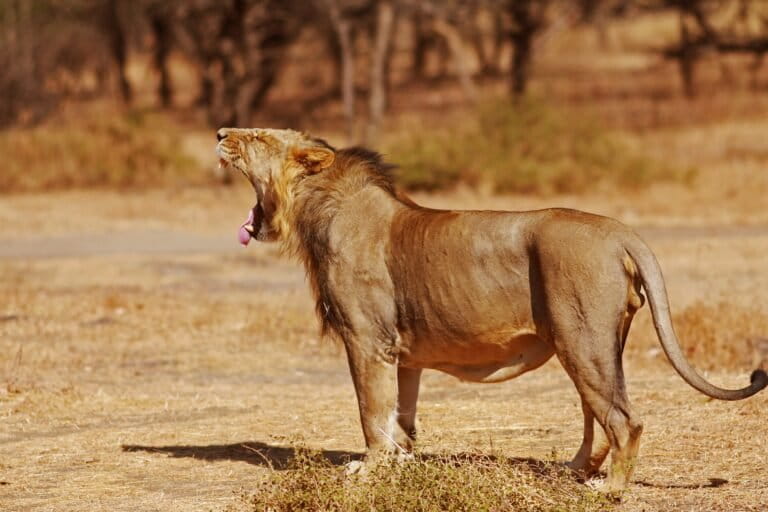
Banner image: An Asiatic lion in Gir National Park. While the WLPA has created a legal framework for protectionist conservation, its effectiveness in ensuring species recovery beyond the iconic mega-fauna like the tiger, lion, leopard and elephant has been limited. Image by Tanmay Haldar via Wikimedia Commons (CC BY-SA 4.0).
Credits