

- India’s first National Adaptation Plan offers an opportunity to make justice central to how the country addresses climate risks and allocates public resources.
- Decisions about whose risks receive attention and who benefits from interventions can reinforce existing inequalities, so adaptation must be just.
- A just adaptation agenda requires enforceable commitments to community participation, vulnerability-based funding, grievance redress and independent monitoring of who benefits.
- The views in this commentary are those of the authors.
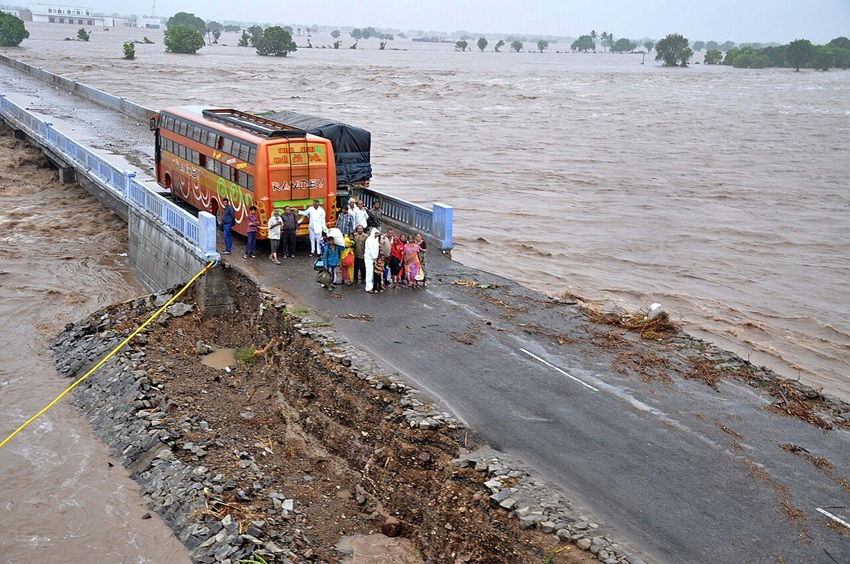
Climate impacts in India are becoming increasingly visible. As parts of the country, including Assam and Bihar, faced floods, drought was declared in Maharashtra, while others like Rajasthan, Gujarat, Andhra Pradesh and Tamil Nadu are facing drought-like situations. Even India’s cities have not been spared by these climate impacts. The Reserve Bank of India has warned that extreme heat and humidity could put up to 4.5% of India’s GDP at risk by 2030 through lost labour hours.
While these disasters differ in geography and hazard, together they underscore a common reality. Climate change is no longer a future environmental challenge. It is reshaping India’s economy, infrastructure and development in real time.
At the same time, the Indian government has been taking steps towards adapting to these challenges. Six of the nine missions under the National Action Plan on Climate Change focus on adaptation, and 34 states and Union Territories have prepared State Action Plans on Climate Change. The latest Economic Survey tabled in January, classifies spending equal to 5.6% of GDP in 2021–22 as “adaptation and resilience-related”, up from 3.7% in 2015–16. While these investments and interventions are necessary, some fundamental questions receive far less attention: adaptation for whom and how? And who gets to make these decisions?
These questions become particularly important as India prepares its first National Adaptation Plan (NAP), a roadmap that will shape public investment in climate resilience over the coming decades. This makes it worth examining how India should adapt to climate change and which principles should guide its adaptation strategy.
These questions are not new. They are already a prominent part of the “transitions” discussion. The central concern is how economies can move away from fossil fuels without imposing disproportionate costs on workers, communities and regions dependent on carbon-intensive industries. From being the language of trade union movements, these “just” transition concerns have become an accepted vocabulary of international climate governance.
For instance, the Paris Agreement acknowledges “the imperatives of a just transition of the workforce,” while, more recently in 2023, the UAE Consensus adopted at the 28th Conference of Parties of the United Nations Framework Convention on Climate Change (UNFCCC) held in the United Arab Emirates reaffirmed that climate action should be implemented in a “just, orderly and equitable manner.” This means justice has become integral to climate mitigation policies because policymakers recognise that climate action itself has socioeconomic consequences.
However, a similar conversation about climate adaptation is yet to be had. Because adaptation aims to protect people from climate impacts, it is often assumed to be inherently just. The logic appears self-evident. If adaptation seeks to help vulnerable and marginalised communities at the forefront of climate impacts, why would it require a separate justice framework?
A justice framework for adaptation
The answer is that adaptation is not just about protecting people from climate risks and impacts. It also involves deciding whose risks to prioritise, where to invest public resources, and what types of knowledge count in decision-making. This also means that adaptation is never merely a technical decision but a series of choices. These choices determine who becomes more resilient and who remains exposed to risk. India’s own adaptation landscape illustrates this challenge.
There are pertinent questions about how adaptation interventions and their benefits are distributed within a society, or of distributive justice.
This is particularly evident in urban adaptation. Across India, cities are investing in Heat Action Plans, early warning systems and emergency preparedness. However, households are expected to shoulder much of India’s required adaptation through measures such as air conditioning, passive cooling and reflective roofs, even though these remain unaffordable or impractical for many people living in informal settlements. A just adaptation strategy would therefore prioritise public cooling infrastructure, shaded public spaces, heat-resilient housing and accessible healthcare and social protection rather than relying primarily on private purchasing power. Moreover, decisions about where to invest should be guided by climate vulnerability rather than political visibility or administrative convenience.
The same logic extends beyond cities. Take the example of solar irrigation. Existing solar irrigation programmes, including PM-KUSUM, have largely focused on individual farmers and individual solar pumps. While these models have expanded access to irrigation, individual ownership can remain difficult for small and marginal farmers and tenant farmers with limited landholding and financial capacity. Community-managed solar irrigation offers an alternative by pooling infrastructure and resources, enabling more inclusive access to reliable irrigation. This can strengthen climate adaptation by reducing dependence on increasingly uncertain rainfall, helping sustain crop production during dry spells, and enabling more flexible crop planning. At the same time, collective management can promote more judicious water use under growing climate and water stress.
These are not hypothetical trade-offs. Given that the adaptation budget is going to be limited and the NAP process organised around distinct sectors, such as disaster management and infrastructure resilience, health, and poverty alleviation and livelihood, it will need to decide how these sectors get resourced in proportion to vulnerability or in proportion to political visibility.
Similarly, effective adaptation begins by recognising whose vulnerabilities matter and what forms of knowledge count in policy design. Climate risks differ fundamentally across India’s diverse landscapes. Mountain communities confront landslides and glacial hazards. Coastal regions face cyclones, erosion and sea-level rise. Forest-dependent communities experience changing fire regimes and ecosystem shifts, while farmers contend with increasingly erratic rainfall. These differences cannot be addressed through uniform national programmes. Adaptation policies must therefore be designed around region-specific vulnerabilities, informed by climate projections and local ecological knowledge.
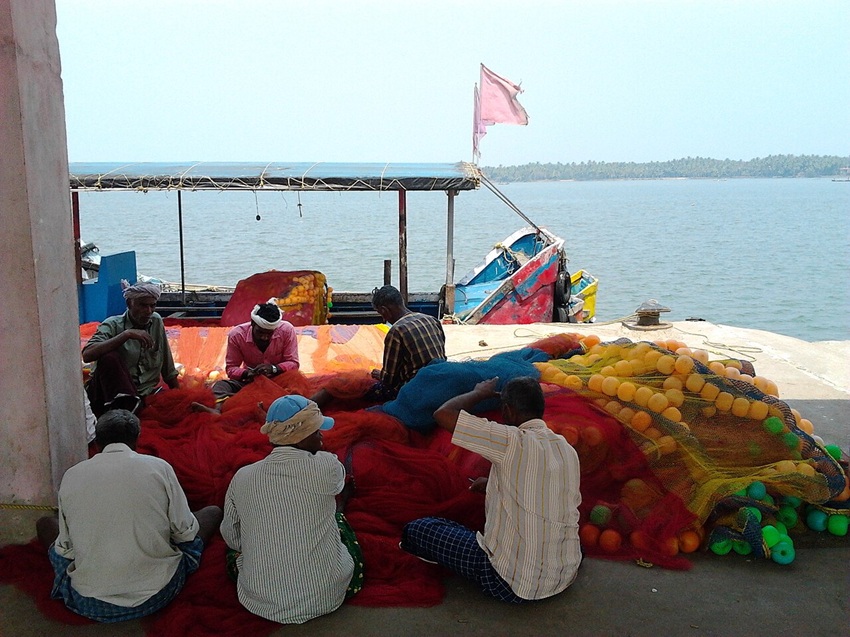
Here too, the NAP’s architecture provides an opening. The proposed plan has a designated traditional knowledge and heritage focus, an acknowledgement that indigenous and community knowledge systems deserve institutional standing beyond tokenism. But recognition on paper does not guarantee recognition in practice. Whether mountain communities’ understanding of slope instability, or fisherfolk’s reading of changing coastal patterns, actually shapes sectoral plans—rather than being noted and then set aside in favour of satellite data and expert models—will determine whether this principle is real or rhetorical.
Communities must shape projects, not just plans
Recognition during policy design must be followed by meaningful participation during implementation. Watershed development, forest restoration, coastal protection and climate-resilient agriculture are all more likely to succeed when local communities exercise genuine agency over how projects are implemented and monitored.
Encouragingly, the NAP’s own design principles already gesture toward this. The Ministry of Environment, Forest and Climate Change has stated that India’s plan will be built on principles including being participatory, transparent and inclusive of the vulnerable. However, the real test is whether this remains aspirational language or becomes procedural commitments like mandatory public consultation windows, community sign-off on sectoral plans, and functioning grievance redress mechanisms that are binding not just on the preparation of the plan but on its implementation.
As India prepares its National Adaptation Plan, it has an opportunity to institutionalise these principles from the outset. Rather than viewing adaptation as a collection of engineering projects or development schemes with a climate label, policymakers should recognise it as a governance challenge that requires explicit attention to justice.
This means translating the NAP’s own stated principles, including participation, transparency, and inclusion of the vulnerable, into enforceable mechanisms such as statutory consultation requirements before sectoral plans are finalised, vulnerability-weighted budget allocation across sectors, and independent monitoring of whether resilience gains reach those most exposed.
India does not simply need more adaptation. It needs adaptation that is just.
Ishan Kukreti, Sony R K and Sarada Prasanna Das are researchers at the Sustainable Futures Collaborative (SFC), where they work on climate adaptation and resilience.
Banner image: Farmers in Lingshed Valley sowing barley in Ladakh. The proposed National Adaptation Plan includes a focus on traditional knowledge and heritage. Image by Ingo Mehling via Wikimedia Commons (CC BY-SA 4.0).
Credits


