- India’s interventions at COP30 centred on equity, finance and national development needs.
- Adaptation, climate finance and unilateral trade measures emerged as major issues for negotiations.
- Civil society voices criticised the draft Global Mutirão text for weakening equity and relying too heavily on private and loan-based finance, warning that it risks shifting the burden of climate action onto developing countries.
With negotiations at the 30th United Nations Climate Conference (COP30) entering the final phase, India intensified its messaging on equity, finance and national circumstances on November 20, using two high-level platforms to highlight what it considers essential for implementing the Paris Agreement.
These interventions came as negotiators began examining the COP30 Presidency’s draft “Global Mutirão” text. Several observers say parts of the document risk weakening the climate justice principles that India has been emphasising in Belém.
The draft retains several options for unilateral trade measures, adaptation finance, and the execution of the New Collective Quantified Goal on climate finance (NCQG), which was agreed upon in Baku, for parties to iron out and agree upon.
For example, it proposes four options to address unilateral trade measures, such as the Carbon Border Adjustment Mechanism (CBAM), which has been a concern for many countries, including India. One option is to organise technical workshops on trade-climate linkages, in coordination with the COP31 Presidency. Other options include convening a dialogue or establishing a platform to examine the nature, scope and cross-border impacts of such measures. The draft also suggests launching an annual dialogue to facilitate discussions among Party and non-Party stakeholders.
However, during the Third Ministerial Roundtable on the UAE Just Transition Work Programme, India’s environment minister Bhupender Yadav emphasised that climate-related unilateral trade measures by developed economies are damaging the trust within the UN climate process. Unilateral trade measures are discussed within the UNFCCC’s Just Transition Work Programme (JTWP).
He further said that a just transition extends far beyond the energy sector, calling it “an economy-wide, all-inclusive, people-centred transformation that must respect national circumstances, ensure equity, and secure social justice.
Sameer Kwatra of the Natural Resources Defense Council said India’s clean energy growth and moderated emissions trajectory reflect credible domestic progress, but warned that climate-linked trade measures are eroding trust between countries.
Adaptation and finance
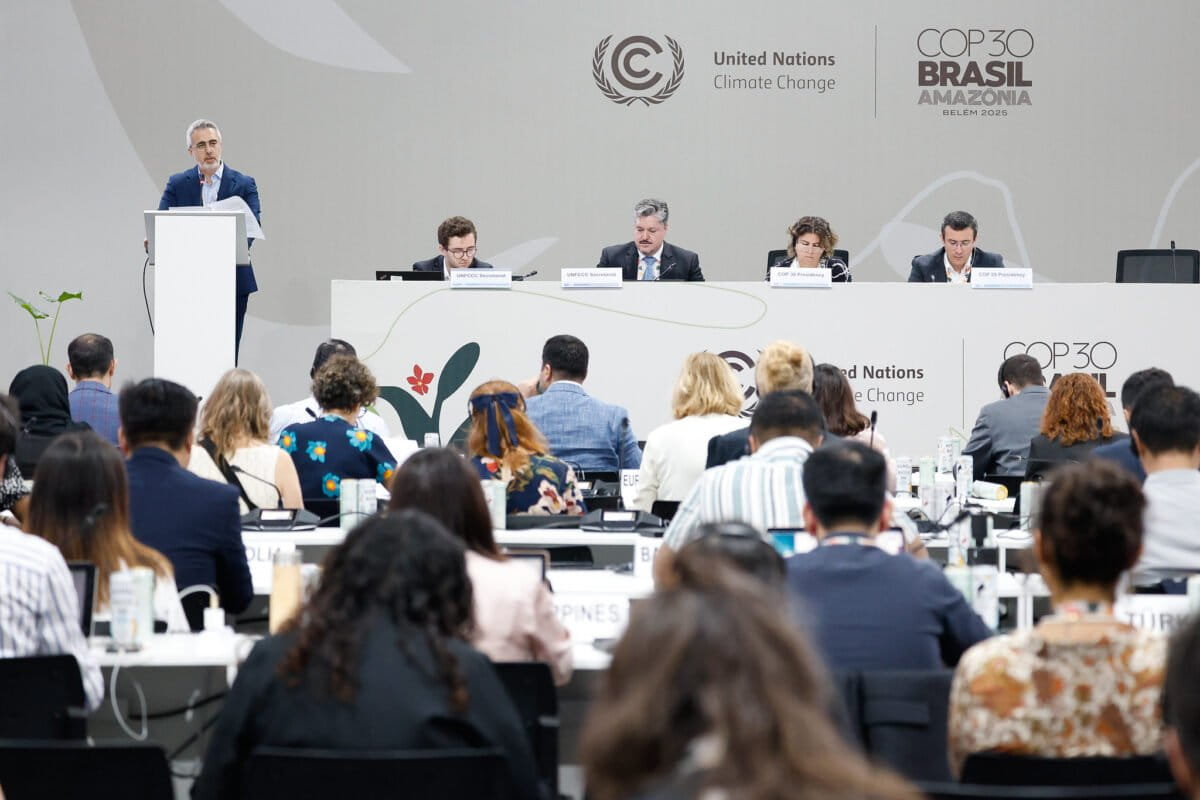
Although COP30 was expected to focus heavily on adaptation, countries remain divided over key questions. The draft text outlines three possible approaches to adaptation finance. The first calls for tripling adaptation funding, with deadlines of 2030 or 2035, and flags “public sources” for further negotiation.
The second option recognises the need to dramatically scale up adaptation finance but does not specify any concrete figure.
The third option calls on developed countries to at the least triple their collective provision of climate finance for adaptation to developing countries from 2025 levels by 2030.
Speaking at the Baku High Level Dialogue on Adaptation, in Belém on November 20, Yadav noted that developing countries will require $310 to 365 billion annually by 2035, while current flows remain at about $26 billion. He said India has increased adaptation-relevant expenditure by 150% between 2016–17 and 2022–23, but continues to face complex, slow procedures when accessing multilateral climate funds. He insisted that adaptation finance must be delivered as grants rather than loans that increase debt burdens.
Indian analysts observing the negotiations said progress on adaptation remains slow. Vaibhav Chaturvedi from the think-tank Council on Energy, Environment and Water (CEEW) noted that the Global Goal on Adaptation lacks political momentum across negotiating blocs and that unclear public finance rules may delay domestic planning.
Climate finance remains a battleground
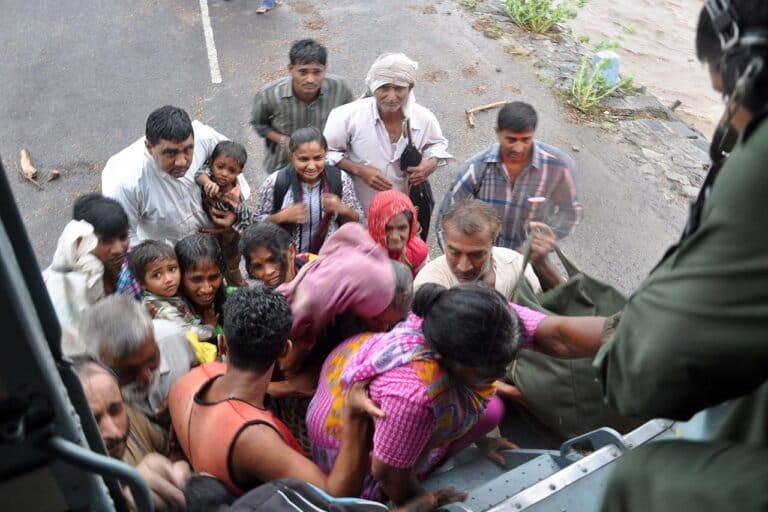
The demand for climate finance remains India’s most consistent message at COP30. Yadav has repeatedly said developed countries must meet their obligations under Article 9.1 of the Paris Agreement, which requires the provision of public, concessional and predictable finance. The draft text mirrors this point. It calls for the operationalisation of Article 9, reaffirms the financial responsibilities of developed countries, and notes that global finance for developing countries must scale up to $1.3 trillion per year by 2035.
During COP29, the parties finalised the NCQG, which calls for a flow of $300 billion from developed to developing countries by 2035. However, several developing countries raised concerns in Baku and afterwards about the way the consensus was reached. They have been reminding the world of Article 9.1 of the Paris Agreement, which states: “Developed country Parties shall provide financial resources to assist developing country Parties with respect to both mitigation and adaptation, in continuation of their existing obligations under the Convention.”
However, civil society voices were more direct in their concerns. Climate activist Harjeet Singh, founding director of the Satat Sampada Climate Foundation, said the Global Mutirão draft text risks diluting the climate justice principles that developing countries have defended for years. Singh said the draft weakens the commitment to equity and Common but Differentiated Responsibilities (CBDR) and could shift the responsibility for climate action onto developing countries that are already facing climate impacts, energy poverty and debt.
Singh said the draft text relies heavily on private finance and multilateral development bank lending, but does not ensure that developed countries meet their legal public finance commitments. He also said the proposal to triple adaptation finance becomes less credible when it combines grants with concessional loans. According to Singh, this approach could deepen the debt burden of vulnerable communities. He further criticised the draft’s language on fossil fuels, noting that references to phasing out “inefficient” subsidies create loopholes rather than driving a full and equitable phase out.
The next stage of negotiations will determine whether the COP30 outcome reflects the principles India and other developing countries have underscored throughout the week or settles for a compromise that leaves major gaps unresolved.
Meanwhile, negotiations were briefly halted after a fire in the COP30 Blue Zone on November 20 and prompted a full evacuation of all delegates and conference participants. UNFCCC later confirmed the blaze was contained.
Read more: India, China step into leadership vacuum at climate meet as the West retreats
Banner image: As negotiations continue behind closed doors, delegates wait outside the COP30 Presidency office. Image © UN Climate Change – Kiara Worth via Flickr (CC BY-NC-SA 4.0).
Credits