- Plant biologist P.V. Shivaprasad received the Tata Transformation Prize 2025 in the Food Security category in recognition of his research on climate-resilient rice varieties.
- Shivaprasad highlights how epigenetic research can aid in developing crops that can withstand climate impacts and provide good nutrition for India’s growing population.
- In this interview, Shivaprasad shares that it is crucial to invest in research to understand the underlying mechanisms of traditional rice varieties that aid them in combating environmental stressors.
To say that rice is an important crop in India would be an understatement. India recently hit a milestone with its rice production. In 2024-25, the country’s rice output was 150 million tonnes, which is 13 million tonnes more than the previous year, marking the largest year-on-year increase in production. In 2025, India consumed about 140 million tonnes of the grain, becoming the second-highest rice consuming country in the world. Amidst growing concerns of climate impacts and the challenges in cultivating rice, these numbers underscore the importance of protecting rice against all odds — and Padubidri V. Shivaprasad of the National Centre for Biological Sciences (NCBS), Bengaluru, is on a mission to do just that.
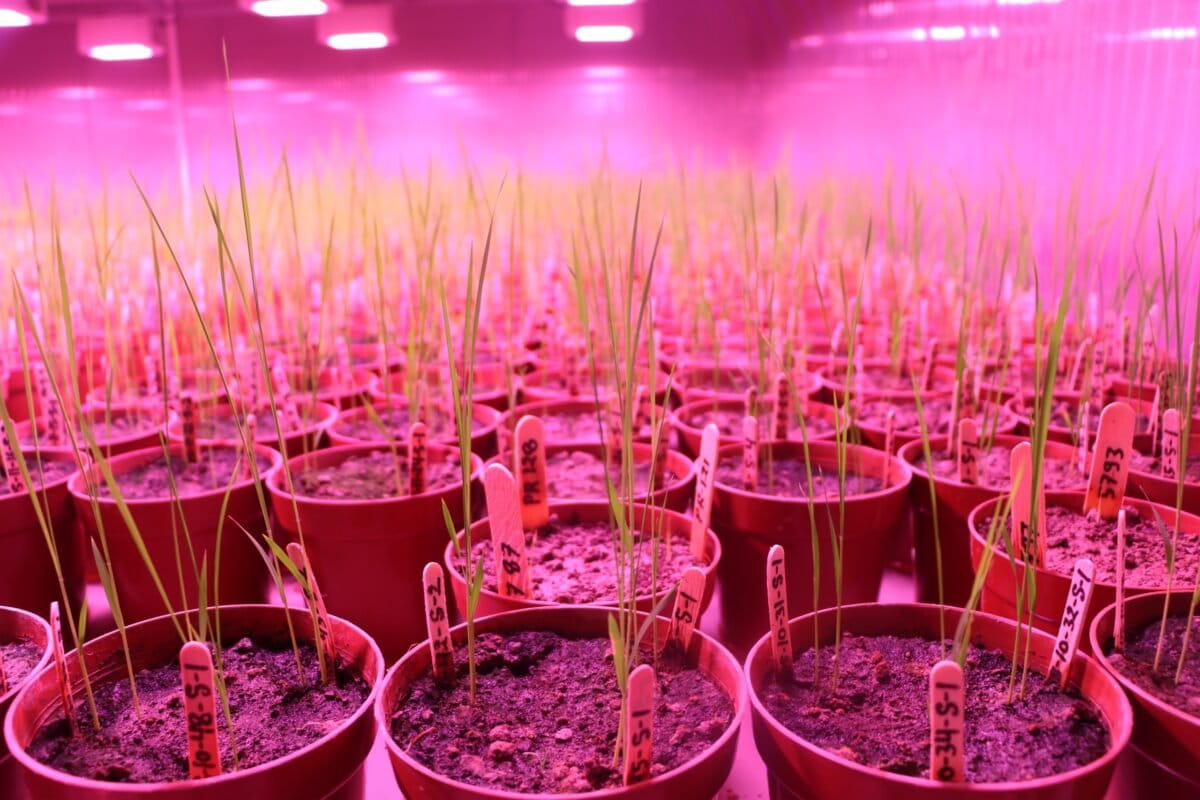
Shivaprasad is a recent recipient of the prestigious Tata Transformation Prize 2025 in recognition of his efforts to produce climate-resilient rice varieties using small RNA modification and epigenetic regulation. His research involves tweaking gene expression by altering the proteins that package DNA (histones) or small RNAs (RNA molecules which are about 19-31 nucleotides long and ‘silence’ or regulate gene expression through various mechanisms), thus making changes without modifying the underlying DNA. Through these targeted interventions, the researcher aims to tap into the strengths of wild rice varieties to improve climate resilience and enhance the nutritional properties of cultivated lines.
Established in 2022, the Tata Transformation Prize is announced by Tata Sons and the New York Academy of Sciences. The Prize recognises Indian researchers who are devising science-based solutions and innovative technologies to address some of the country’s most pressing issues in three categories: Food Security, Healthcare and Sustainability. Along with Shivaprasad, who won the prize in the Food Security category, other winners include Balasubramanian Gopal (Sustainability) and Ambarish Ghosh (Healthcare) of the Indian Institute of Science, Bengaluru.
In this interview, edited for clarity and length, Shivaprasad talks about his research journey, the magical world of small RNAs, and what it means to produce the rice of the future.
Mongabay: You come from a family of farmers. How did this exposure to agriculture at an early age influence your research interests?
Shivaprasad: I come from a paddy-growing family. Agriculture continues to be an important aspect of our lives. But it was my grandmother who gave me my first glimpse into the world of plants. She was a herbalist, and during my childhood, she often sought my help in foraging for herbs or climbing trees to collect leaves. This was my initiation of sorts into the plant kingdom, and I think I fell in love with them right away. During my Master’s degree in Applied Botany, I participated in a project to survey plants in the Western Ghats region. My friend and I spent about eight months travelling through various parts of the Ghats and camping outside. I then went on to pursue my Ph.D. in Biotechnology from Madurai Kamaraj University, Madurai, under the guidance of K. Veluthambi. With a fellowship from the Council of Scientific & Industrial Research (CSIR), my research focused on plant viruses, especially on Vigna mungo (black gram), identifying ways to counter viral attacks on these plants. MKU was a wonderful place. I remember the principal investigators would stay in their labs till midnight, which meant we students would also do the same. We had late night journal club meetings, and most days, I would go back to my room at four in the morning only to be back in the lab again at nine. It was a lot of learning, but also very stimulating and enriching. Professor Veluthambi is a fantastic guide and person. My Ph.D. research was also partly carried out in Switzerland, and I continued my post-doctoral work in plant viruses in the country through a European Molecular Biology Organisation (EMBO) Fellowship.
Mongabay: How did you begin researching small RNAs?
Shivaprasad: I was introduced to the world of small RNAs when I moved to the University of Cambridge to work under Sir David Baulcombe. He is a pioneer in this field, and his research led to the discovery of how short-interfering RNAs (a category of small RNAs) played a role in gene silencing. My research on tomatoes looked at how small RNAs influence traits in offspring beyond what parents exhibit. In simple terms, hybrid seeds (produced by cross-pollinating two genetically distinct plants to combine traits like disease resistance and plant height) are sold because it is believed that these desirable traits will be lost in the subsequent generations. However, we found that some of the traits are inherited and expressed with more vigour due to small RNAs and epigenetic changes. These are called transgressive phenotypes outside the range of parents, and this knowledge deepens our understanding of plant breeding. Working with Professor Baulcombe was a great opportunity and he taught me to think out of the box. After this research, I received a Ramanujan Fellowship and moved to NCBS. I have been here for the past 12 years, continuing my work on small RNAs, epigenetics and chromatin biology.
Mongabay: Can we break this down a little for our readers? What is the relationship between small RNAs and the domestication of crops? How does an understanding of this relationship aid in developing climate-resilient crops?
Shivaprasad: Let us take the example of rice itself. What we eat as rice today comes from a wild semi-aquatic perennial grass. Very few people would recognise it as paddy. The stalks were weak and it would produce very few grains, which would easily fall off or shatter. But this is what you expect seeds to do. Our ancestors converted this wild plant into landraces, cultivating them for 10,000 odd years, adapting the crops to cope with the local climate vagaries, soil changes, local practices and the needs of the local communities. Rice became an important crop, and these landraces are also highly nutritious. They are rich in compounds like anthocyanins and flavanols, which have antioxidant properties and aid the plant in combating environmental stressors. But all that changed after the Green Revolution. The yields of these landraces were not enough to feed our growing population, and there was a real shortage of food. That’s when the Green Revolution lines were introduced, which produced almost eight to ten times more grains than the traditional ones. They were bred with the single aim to increase output, which stripped them off their defences, making it challenging for them to cope with the impacts of climate change, and pest and pathogen attacks. These lines are also cultivated across the country, overlooking the influence of local agroclimatic conditions. Plus, the nutritive quality has deteriorated, which means we are mainly eating starch.
To address these issues with rice cultivation, we need to revisit some of the characteristics of the grain that have been lost. Our driving force was to check what changed during the process of domestication. Surprisingly, we found that not much of these changes are driven by genetics. These are what we call epigenetic changes, where we observe small chemical modifications in DNA or in the proteins called histones. The epigenetic changes in plants are fed by the small RNAs and can impact a particular part of the genome, a single gene or many genes, thus altering the production of proteins. Consider this to be like a switch for the genome. Our strategy is to incorporate these epigenetic variations from landraces or wild relatives and make the cultivated rice varieties more climate-resilient and nutritious.
Mongabay: Can you give an example of how this works?
Shivaprasad: Recently, we discovered a variant of a new histone, which regulates around 1,200 genes. If the plant is subjected to saline conditions, this histone variation influences a set of proteins to go up or down, thus enabling the plant to cope. Such a capacity is robust in rice varieties like Pokkali. In cultivated lines, these changes are too small for the plant to combat the adverse conditions. Simply put, what we are doing is making rice crops remember the abilities they once had.
Mongabay: Apart from rice, what are some of the other crops where you have identified epigenetic regulators contributing to stress tolerance or nutrition?
Shivaprasad: We have also done some work in grapes and tobacco plants. You must have noticed that the colour of grapes can vary between green, as in the Dilkush variety, to red, red-blue, or the dark purple colour that is seen in the Bangalore Blue variety. We found a small RNA-mediated change that impacts the colour of grapes. So, when there are a lot of small RNAs of a specific type, then you see a strong blue/purple colour. The intense colour is due to the presence of anthocyanins, and when more of this compound is produced, we get more blue/red/purple shades. Darker colours are favourable attributes for seed dispersal, as birds are more attracted to such fruits. Even we humans prefer fruits with more colours. In tobacco and grapes, we could also increase the antioxidant content by increasing flavanols through small RNA/epigenetic changes. Our results showed more flavanol content in tobacco compared to what anyone has achieved in any crop with regards to this antioxidant.
Mongabay: What are some of the changes in rice cultivation that you have witnessed as an agriculturist and now as a researcher?
Shivaprasad: I think rice is an amazing crop. Growing up, I remember we had different rice varieties for different regions in our fields. Some of the fields were in an elevated landscape, and we used to cultivate a suitable rice variety there. We also had a rice variety that could flourish under the shade of trees and was cultivated in a small patch near the forest area. I witnessed how these varieties were getting lost as monocropping took over. There are so many distinct factors in these traditional rice varieties. Many of them are known for their medicinal properties. I grew up learning about all this, and when I saw them disappearing from the fields and in our conversations, I thought, why isn’t anyone studying the underlying mechanism that makes these varieties special? Only when we know what is going on can we make informed decisions about cultivating rice.

Mongabay: What are some of the significant challenges that India faces in food production today?
Shivaprasad: We have limited space to cultivate food for the entire population. So, we will need to find a middle ground. If we completely shift to the traditional rice varieties, the yields and price points will not be conducive to meet the country’s needs. Only a few people will be able to access the grain. At the same time, if we only eat the high-yielding varieties, we will face a lot of metabolic and environmental issues. We must find ways to make rice better, while ensuring that there is biodiversity on the plate. Beyond grains, our fields also produce several green leafy vegetables that may not be very tasty but are vital sources of nutrition. I see that you have reported on wild edibles from rice fields. Anne soppu (Water Spinach) is one such green that pops up in the rice fields in all ragi-growing regions. Our taste buds must start accommodating more diverse foods and embracing all that our fields provide. We also need to increase local production and consumption. India is home to several smallholder farmers, so policies must be devised to identify what grows well in a given region and then encourage its cultivation. We need to address food security through multiple ways.
Mongabay: What are your research plans moving forward, and how does the recognition support your work in climate-smart crop production?
Shivaprasad: The Prize has given us funding for further research, and this will help us identify newer and better traits for rice crops. We hope to collaborate with agricultural universities so we can also conduct field trials and see how these experiments respond in the field. We are looking forward to seeing those results.
Mongabay: Before we end the interview, what keeps you going?
Shivaprasad: Plants. Not that I’m unhappy with other forms of life, but I think plants are fascinating for a lot of reasons. I did briefly consider joining the civil services, and I also cleared the Karnataka Administrative Service (KAS) exam. But once I decided to be a plant biologist, there was no looking back. I don’t think I ever wanted to do anything other than this, so I am quite happy. I also have unconditional support from my wife and children, my lab members and the NCBS leadership.
Banner image: Padubidri V. Shivaprasad. Image by Sharmila Vaidyanathan.
Credits